Best Eckhart Tolle Audiobooks
Eckhart Tolle built a career on a single, radical proposition: that the present moment is the only place where life actually happens. The Power of Now made that case with the clarity of someone who had genuinely experienced what he was describing — not as philosophy borrowed from tradition but as lived transformation. His prose is unhurried and repetitive in a deliberate way, circling the same ideas from different angles until something clicks. A New Earth extended that framework into ego, identity, and collective consciousness, and became one of the best-selling spiritual books of the century. Stillness Speaks distills it further into short, almost aphoristic passages. Tolle narrates his own work, and that matters — his voice carries the same unhurried quality as his writing. For readers exhausted by self-help that demands productivity, Tolle offers the opposite: stop, be still, and pay attention.
Where to Start with Eckhart Tolle
- Best entry point → A New Earth: Awakening to Your Life's Purpose
- Best standalone → Stillness Speaks
- Short listen, big payoff → Practicing the Power of Now: Essential Teachings, Meditations, and Exercises from the Power of Now
- What fans keep coming back to → The Eckhart Tolle Audio Collection (Power of Now)
- Highest rated by listeners → Oneness With All Life: Inspirational Selections from A New Earth
Best Eckhart Tolle Audiobooks
- 1

A New Earth: Awakening to Your Life's Purpose
Narrated by Eckhart Tolle
★ 4.61 BLT Score (242.0K ratings)★ 4.17 Goodreads (221.2K) ★ 4.78 Audible (20.8K)More about this pick
Tolle narrating his own work on consciousness creates an intimate teaching, not a lecture; his voice mirrors the calm presence he's asking you to find.
- 2

Stillness Speaks
Narrated by Eckhart Tolle
★ 4.57 BLT Score (25.6K ratings)★ 4.28 Goodreads (21.4K) ★ 4.82 Audible (4.2K) - 3

Practicing the Power of Now: Essential Teachings, Meditations, and Exercises from the Power of Now
Narrated by Eckhart Tolle
★ 4.53 BLT Score (55.5K ratings)★ 4.26 Goodreads (50.9K) ★ 4.77 Audible (4.6K) - 4

Oneness With All Life: Inspirational Selections from A New Earth
Narrated by Eckhart Tolle
★ 4.43 BLT Score (3.2K ratings)★ 4.35 Goodreads (2.7K) ★ 4.92 Audible (509) - 5

The Eckhart Tolle Audio Collection (Power of Now)
Narrated by Eckhart Tolle
★ 4.33 BLT Score (458.6K ratings)★ 4.15 Goodreads (457.6K) ★ 4.65 Audible (1.0K) - 6

Freedom from the World: Bridging the Dimensions of Form and Formlessness
Narrated by Eckhart Tolle
★ 4.27 BLT Score (1.5K ratings)★ 4.57 Goodreads (111) ★ 4.85 Audible (1.4K)More about this pick
Eckhart narrating his own work on presence and the formless dimension isn't optional. His voice, pacing, and silence are the teaching itself, not just commentary on it.
- 7
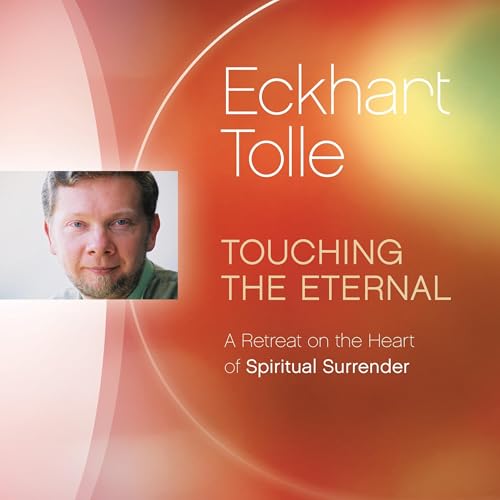
Touching the Eternal - India Retreat (DVD)
Narrated by Eckhart Tolle
★ 4.17 BLT Score (786 ratings)★ 4.62 Goodreads (63) ★ 4.85 Audible (723) - 8

Essential Meditations with Eckhart Tolle: Guided Sessions and Practical Teachings
Narrated by Eckhart Tolle
★ 4.06 BLT Score (348 ratings)★ 4.39 Goodreads (66) ★ 4.86 Audible (282)More about this pick
Tolle narrating his own meditations means his presence becomes the practice: hearing him guide you into stillness hits different than reading about it.
- 9

Breaking the Habit of Negative Thinking and Self-Talk
Narrated by Eckhart Tolle
★ 3.99 BLT Score (388 ratings)★ 4.05 Goodreads (146) ★ 4.77 Audible (242)More about this pick
When the teacher narrates his own work, the voice becomes the evidence. Tolle's calm presence here isn't described, it's demonstrated.
- 10

From Chaos to Consciousness: How Accelerating Your Awakening Heals Conflict for Us Individually and Collectively
Narrated by Eckhart Tolle
★ 3.74 BLT Score (75 ratings)★ 4.23 Goodreads (31) ★ 4.52 Audible (44)More about this pick
Hearing Tolle narrate his own teachings on presence is casting perfection: his calm voice becomes the substance of what he's teaching.