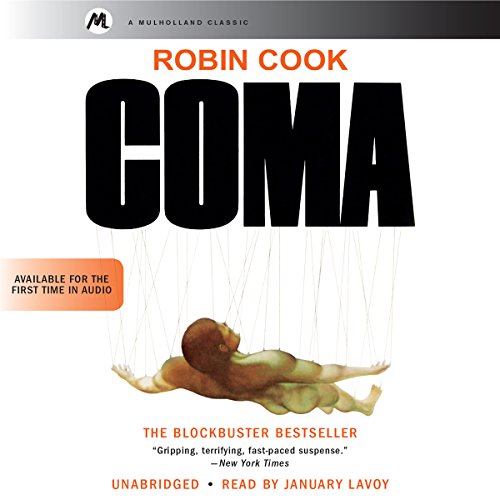
Why You'll Love This
A medical student notices a pattern no one wants her to notice — and the hospital itself starts pushing back.
- Great if you want: institutional conspiracy thriller where the danger feels uncomfortably real
- The experience: tense and propulsive — paranoia builds with every chapter
- The writing: Cook embeds just enough clinical detail to make the horror credible, not clinical
- Skip if: dated gender dynamics in the protagonist's world bother you
About This Book
Something is wrong at Boston Memorial Hospital. Patients check in for routine procedures — minor surgeries, low-risk operations — and never wake up. One after another, they slip into comas with no clear medical explanation, and the staff seems more interested in moving on than in asking why. When third-year medical student Susan Wheeler loses two patients to this same inexplicable fate, she refuses to let it go. What she uncovers reaches far beyond hospital negligence into something far more calculated and disturbing. Robin Cook taps into a primal fear — that the institution meant to heal you might be the most dangerous place you could be.
Cook wrote Coma in 1977, and it remains a tight, propulsive read that essentially invented the medical thriller as a genre. The real craft here is in the details: the clinical texture of hospital life feels genuinely observed, lending the conspiracy at its center an unsettling plausibility. Susan is a compelling protagonist precisely because she's out of her depth but refuses to act like it. The pacing is relentless without being cheap, and Cook never lets the technical specificity slow the tension — if anything, knowing exactly how things work makes everything scarier.