
Why You'll Love This
Christie strips away the murder and proves she could make moral ambiguity hurt just as sharply as any corpse.
- Great if you want: Christie without a detective — just sharp human consequence
- The experience: Brief and quietly tense, with a twist of the knife at the end
- The writing: Christie's economy of emotion: maximum impact, minimum words
- Skip if: you're here for mystery and detection — there is none
About This Book
A woman on the verge of escape — from a loveless marriage, from a life she no longer wants — finds that the moment she chooses herself, the past refuses to let go. "Magnolia Blossom" places Theo Darrell at a crossroads between desire and duty, and Christie makes every step of that journey feel genuinely fraught. The emotional stakes here aren't built around a murder or a mystery in the traditional sense, but around a quieter, more personal kind of reckoning: what do we owe the people we've stopped loving, and what does it cost us to find out?
What makes this short story worth returning to is how much Christie accomplishes in so few pages. She establishes character, atmosphere, and moral complexity with an economy that longer novels can't always match. The prose is clean and purposeful, the tension coiled tight beneath polite surfaces — classic Christie. Originally published in 1926, it carries the particular texture of its era without feeling dated, and it reminds readers that her gifts extended well beyond the drawing-room detective puzzle into something more genuinely human.
This Book Features
Browse Related Lists
More by Agatha Christie

And Then There Were None
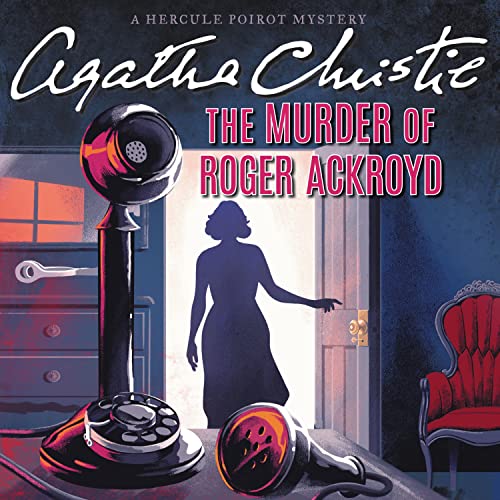
The Murder of Roger Ackroyd (Agatha Christie - HINDI Book 1) (Hindi Edition)
239 pages

Murder on the Orient Express
274 pages

Death on the Nile (Poirot)

The Mysterious Affair at Styles
209 pages
![[The Murder at the Vicarage] [by: Agatha Christie]](https://m.media-amazon.com/images/I/51tIdNJ+fJL._SL500_.jpg)
[The Murder at the Vicarage] [by: Agatha Christie]
236 pages