
Seeing Like a State: How Certain Schemes to Improve the Human Condition Have Failed
The Institution for Social and Policy Studies
by James C. Scott
Narrated by Michael Kramer
Why Listen?
Michael Kramer's steady, measured delivery transforms Scott's dense historical analysis into gripping case studies—you'll actually *want* to hear how authoritarian planning schemes collapse under their own hubris.
About This Audiobook
Political scientist James C. Scott examines the recurring tragedy of ambitious state-led projects that promise human progress but deliver catastrophe instead. From Soviet collectivization to modernist city planning, Scott traces how governments repeatedly impose rigid, top-down schemes that ignore local knowledge and complex social realities. He identifies four dangerous conditions that enable these failures: bureaucratic simplification of society, blind faith in scientific planning, authoritarian power willing to override resistance, and weakened communities unable to push back. The work spans centuries and continents, revealing patterns in how well-intentioned technocratic visions consistently underestimate human complexity.
Michael Kramer's measured narration proves ideal for Scott's dense analytical framework, allowing listeners to absorb intricate connections between seemingly disparate historical cases. His steady pacing gives weight to Scott's methodical argumentation while maintaining engagement through extensive examples and case studies. Kramer navigates the academic terminology and foreign concepts with clarity, making complex political theory accessible without sacrificing intellectual rigor. The audio format enhances Scott's storytelling approach, transforming what could be dry policy analysis into compelling cautionary tales about the hubris of centralized planning and the vital importance of respecting local wisdom.
Browse Related Lists
More narrated by Michael Kramer

The Hero of Ages
Brandon Sanderson
27h 25m

The Final Empire
Brandon Sanderson
24h 39m

Never Split the Difference
Chris Voss, Tahl Raz
8h 7m
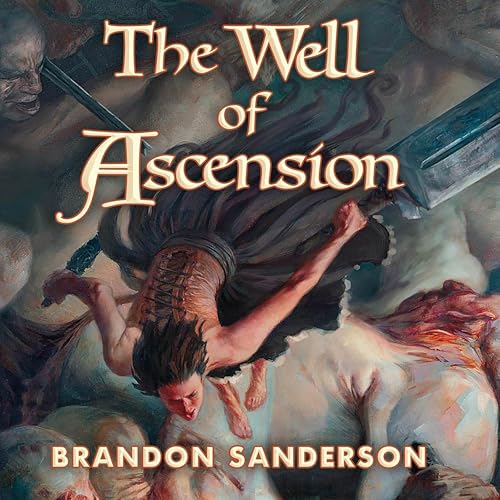
The Well of Ascension
Brandon Sanderson
28h 56m

The Lost Metal
Brandon Sanderson
18h 46m

The Bands of Mourning
Brandon Sanderson
14h 41m