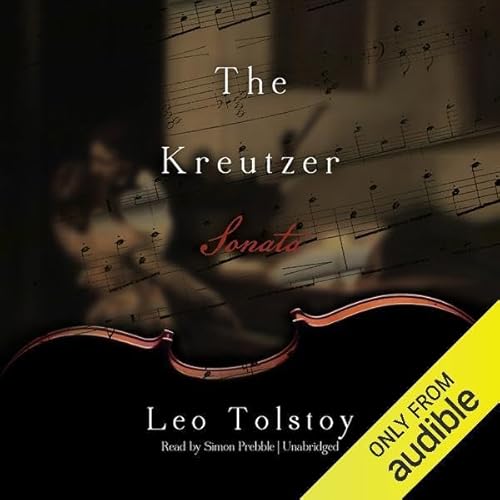
Why You'll Love This
A man confesses to murdering his wife on a train — and by the end, you'll understand exactly how he got there.
- Great if you want: a raw, unsettling dissection of jealousy, desire, and marriage
- The experience: claustrophobic and relentless — Tolstoy tightens the screws slowly
- The writing: confessional monologue that turns philosophical without losing its menace
- Skip if: Tolstoy's moralistic screeds on sex and society try your patience
About This Book
Few novels dare to place a man on trial for his own life story — not in a courtroom, but in a train compartment, speaking through the night to a stranger who cannot escape. Tolstoy's The Kreutzer Sonata is a story about marriage, desire, jealousy, and the violence that can fester beneath the surface of respectable domestic life. Its central figure is a man consumed by confession, desperate to be understood while almost certainly unreliable, and the questions he raises about love, possession, and what we owe one another cut far deeper than any simple verdict could resolve.
What makes this novella so unsettling as a reading experience is its relentless intimacy. Tolstoy constructs the narrative as a monologue barely contained — breathless, circular, self-justifying — and the form mirrors the psychology perfectly. Benjamin Tucker's translation preserves the rawness of that voice without softening its edges. Readers who expect a polished moral argument will find something far more uncomfortable: a text that implicates the reader in the listening, demanding active judgment rather than passive absorption.