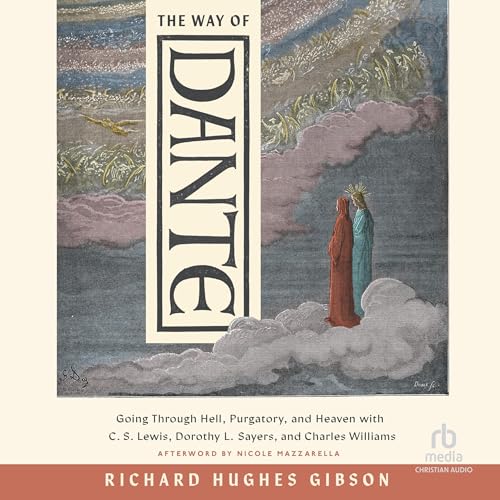
The Way of Dante: Going Through Hell, Purgatory, and Heaven with C. S. Lewis, Dorothy L. Sayers, and Charles Williams (Hansen Lectureship Series)
by Richard Hughes Gibson, Nicole Mazzarella
Why You'll Love This
Three of the twentieth century's greatest Christian writers were all secretly obsessed with the same medieval poet — and that obsession changed everything they wrote.
- Great if you want: deeper insight into Lewis, Sayers, and Williams through a shared literary lens
- The experience: cerebral and contemplative — best read slowly, with Dante nearby
- The writing: Gibson weaves literary criticism and spiritual reflection without losing either thread
- Skip if: you have no familiarity with The Divine Comedy or the Inklings
About This Book
Dante's Divine Comedy has inspired, confounded, and transformed readers for seven centuries—but what happens when three of the twentieth century's most beloved Christian thinkers encounter it together? The Way of Dante traces how C. S. Lewis, Dorothy L. Sayers, and Charles Williams each wrestled with Dante's great allegorical journey, and how that wrestling reshaped their understanding of sin, love, and glory. Richard Hughes Gibson and Nicole Mazzarella argue that you cannot fully understand these three writers without understanding their debt to a medieval Florentine poet, and that argument turns out to be quietly electrifying.
What distinguishes this book is how it moves between worlds without losing its footing—between medieval allegory and twentieth-century Inklings, between literary criticism and genuine theological inquiry. The prose is accessible without being breezy, the structure builds carefully from hell through purgatory to heaven, and the authors bring enough context to make the ideas feel alive rather than academic. Readers who love Lewis, Sayers, or Williams will find fresh angles on familiar figures; readers who have always meant to tackle Dante will find an unusually welcoming door in.