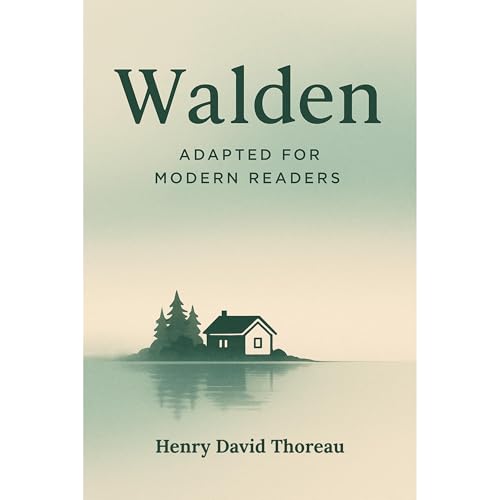
Walden
by Henry David Thoreau
Why You'll Love This
Thoreau spent two years alone in the woods and came back with a devastating argument that most of us are living someone else's life.
- Great if you want: philosophy that challenges how you spend your time and energy
- The experience: meditative and unhurried — reads like thinking out loud beside a fire
- The writing: dense, aphoristic prose that rewards slow reading and rereading
- Skip if: you want narrative momentum — this is argument and observation, not story
About This Book
What would it feel like to strip your life down to its essentials and actually pay attention? In 1845, Thoreau built a small cabin on the shores of Walden Pond and spent two years doing exactly that—observing the woods, the seasons, his own restless mind, and the strange busyness of the world he'd stepped away from. This is not a story of escape, but of confrontation: with nature, with economy, with the question of how much of ordinary life we accept without ever choosing it. Thoreau's experiment cuts close because the discomfort he's prodding at hasn't aged a day.
Reading Walden is its own kind of slow adventure. Thoreau moves between rapturous nature writing and sharp social critique without warning, and that unpredictability is part of the pleasure—a paragraph about ice-fishing can suddenly become an argument about labor and freedom. His prose rewards patience: dense in places, luminous in others, and shot through with a dry wit that most people don't expect. The book doesn't unfold so much as accumulate, leaving readers with sentences that surface in the mind long after the pages are closed.