Best Edgar Allan Poe Books
Edgar Allan Poe didn't invent darkness in literature — he gave it architecture. His prose operates on pressure: sentences that tighten like a vice, narrators whose reliability unravels at precisely the wrong moment. The Tell-Tale Heart isn't a horror story so much as a masterclass in psychological suffocation, and The Fall of the House of Usher turns atmosphere itself into a weapon. Poe essentially created the modern detective story, the psychological thriller, and the Gothic horror tale simultaneously — a founding achievement that most writers couldn't match in three careers. His poetry, from The Raven to Annabel Lee, is rhythmically hypnotic, built to lodge in the brain long after the page turns. Readers who want dread that comes from within — from a crumbling mind rather than a monster — will find Poe impossible to shake.
Where to Start with Edgar Allan Poe
- Best entry point → The Complete Stories and Poems of Edgar Allan Poe
- Best standalone → The Raven
- Start The dark Artifices series → Annabel Lee
- What readers keep coming back to → The Tell-Tale Heart and Other Writings
- Highest rated by readers → The Works of Edgar Allan Poe, Volume II (Edgar Allan Poe Classics Collection) (The Edgar Allan Poe Collection #2)
Best Edgar Allan Poe Books
- 1

The Complete Stories and Poems of Edgar Allan Poe
More about this pick
From detective fiction's birth in "The Murders in the Rue Morgue" to pure psychological terror in "The Tell-Tale Heart," Poe invented entire genres. This complete collection shows how his obsessions with death, guilt, and madness created American literature's dark foundation.
★ 4.40 Goodreads (297.3K ratings) - 2
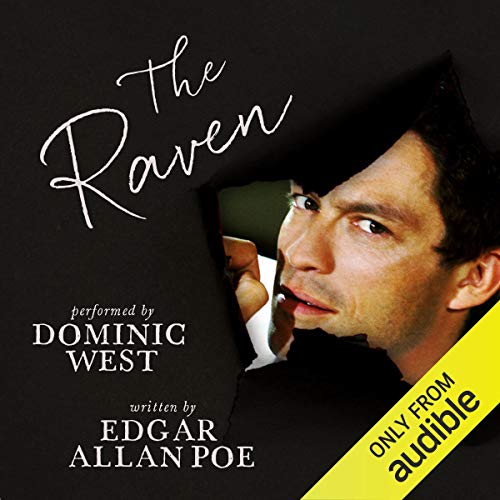
The Raven
More about this pick
Poe's most famous poem follows a scholar's midnight encounter with a raven whose repeated "Nevermore" becomes an increasingly torturous response to questions about death and lost love. The internal rhyme and rhythm create hypnotic, inescapable dread.
★ 4.29 Goodreads (172.0K ratings) - 3

The Tell-Tale Heart - Il cuore rivelatore / The Premature Burial - La sepoltura prematura
Gilded Nightmares – Timeless British Library Books
by Edgar Allan Poe, Elisabetta Querci
More about this pick
Two of Poe's most chilling tales: a murderer's guilt manifesting as the sound of his victim's beating heart, and a man's paralyzing fear of being mistakenly entombed while still alive.
★ 4.19 Goodreads (244.9K ratings) - 4
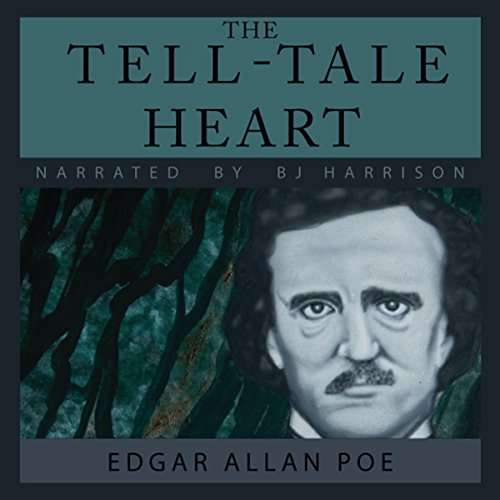
The Tell-Tale Heart and Other Writings
Gilded Nightmares – Timeless British Library Books
More about this pick
Poe's collection spans his most chilling tales of psychological terror, from the narrator's obsession with an old man's eye to detective Dupin's logical deductions in early crime fiction.
★ 4.19 Goodreads (244.9K ratings) - 5

Annabel Lee
The dark Artifices
by Edgar Allan Poe, Gilles Tibo
More about this pick
The narrator's childhood love for Annabel Lee was so intense that jealous angels caused her death, yet his devotion transcends the grave. Poe's final complete poem explores his signature theme with haunting musicality.
★ 4.32 Goodreads (12.0K ratings) - 6

The Cask of Amontillado: Edgar Allan Poe Biography
More about this pick
Poe's masterpiece of revenge follows Montresor as he leads the unsuspecting Fortunato deep into catacombs for a taste of rare Amontillado wine.
★ 4.07 Goodreads (89.0K ratings) - 7

The Masque of the Red Death : Edgar Allan Poe
More about this pick
Prince Prospero locks himself and wealthy nobles in his abbey during a plague, hosting a masquerade in seven colored rooms. Death arrives anyway in Poe's allegorical masterpiece.
★ 4.05 Goodreads (48.1K ratings) - 8

The Works of Edgar Allan Poe, Volume II (Edgar Allan Poe Classics Collection)
The Edgar Allan Poe Collection • Book 2
More about this pick
Dupin's analytical mind solves impossible crimes while Poe explores the thin line between reason and madness through tales that defined both detective fiction and psychological horror.
★ 4.34 Goodreads (2.6K ratings) - 9

The Works of Edgar Allan Poe, Volume 2 - Edgar Allan Poe
The Works of Edgar Allan Poe • Book 2
by Edgar Allan Poe, Michael Barefoot
More about this pick
Poe's masterworks dissect madness, revenge, and premature burial with surgical precision, proving why "The Fall of the House of Usher" and "The Pit and the Pendulum" remain unmatched.
★ 4.34 Goodreads (2.6K ratings) - 10

The Fall of the House of Usher: Edgar Allan Poe's Haunting Tale of Family Secrets and Tragic Decay
More about this pick
A decaying mansion mirrors the psychological collapse of its inhabitants in Poe's ultimate tale of Gothic horror and family curse.
★ 3.84 Goodreads (90.4K ratings) - 11

Ghost Stories: Stephen Fry's Definitive Collection
by Stephen Fry, Washington Irving, M.R. James, Amelia B. Edwards, Robert Louis Stevenson, Algernon Blackwood, Edgar Allan Poe, Charlotte Riddell, Bram Stoker
More about this pick
Classic ghost stories from Poe to M.R. James, curated by someone who understands both literary merit and what actually frightens readers across centuries.
★ 3.97 Goodreads (1.4K ratings) - 12

William Wilson: (Edgar Allan Poe Masterpiece Collection)
More about this pick
The story of a man tormented by his exact namesake and physical double, who materializes whenever he's about to commit his worst acts. Poe crafts a chilling exploration of conscience made manifest through supernatural doubling.
★ 3.78 Goodreads (5.7K ratings) - 13

The oval portrait (Edgar Allan Poe Collection nº 3)
More about this pick
Poe's haunting tale of a man discovering a mysteriously lifelike portrait in a decrepit chateau, where beauty and death intertwine in classic gothic fashion.
★ 3.72 Goodreads (7.8K ratings) - 14

The Gold Bug
by Edgar Allan Poe, Tobias Hill
More about this pick
William Legrand's friends think he's lost his mind when an insect bite leads to his obsession with finding buried treasure through mysterious coded messages.
★ 3.70 Goodreads (7.6K ratings) - 15

The Facts in the Case of M. Valdemar
More about this pick
A mesmerist hypnotizes a man in articulo mortis—at the point of death—with grotesque consequences. Poe's mock-scientific style convinced readers this horror was fact.
★ 3.70 Goodreads (5.5K ratings) - 16

H. P. Lovecraft's Book of the Supernatural
by Stephen Jones, Henry James, Washington Irving, Edgar Allan Poe, Rudyard Kipling, Bram Stoker, Robert Louis Stevenson, Guy de Maupassant, Ambrose Bierce, Arthur Conan Doyle, Davina Porter, Steven Crossley, Bronson Pinchot
More about this pick
Lovecraft's essential 1927 essay 'Supernatural Horror in Literature' guides readers through the genre's evolution, accompanied by the finest stories he celebrated. Classic anthology spanning from Edgar Allan Poe through contemporary British and American masters.
★ 3.68 Goodreads (339 ratings) - 17

The Haunted Palace
More about this pick
Originally woven into 'The Fall of the House of Usher,' this poem traces a palace's transformation from glory to ruin as metaphor for mental collapse. Poe's architectural imagery becomes increasingly disturbing.
★ 3.54 Goodreads (383 ratings) - 18

Coffins
Vampire Archives • Book 3
by Otto Penzler, Harlan Ellison, Robert Bloch, Edgar Allan Poe, F. Paul Wilson, Scott Brick, Robertson Dean, Steve West, Robin Sachs, Mark Bramhall, John H. Mayer, Ryan Gesell, Rob Shapiro
More about this pick
Classic vampire fiction spans from Poe's gothic foundations to modern masters like Ellison and Wilson. This collection proves the vampire myth's enduring power across different eras and storytelling approaches.
★ 3.60 Goodreads (83 ratings) - 19

Metzengerstein
More about this pick
Ancient family hatred between the Metzengersteins and Berlifitzings culminates when fire, prophecy, and a mysterious horse intertwine to fulfill a generations-old curse in Hungary.
★ 3.23 Goodreads (2.9K ratings)