Why You'll Love This
Herbert's final novel feels like a man racing to finish something enormous before time runs out — and that urgency is on every page.
- Great if you want: philosophical chess matches between powerful factions with competing ideologies
- The experience: dense and slow-burning — a book you think through, not race through
- The writing: Herbert layers meaning under meaning; dialogue carries entire political architectures
- Skip if: you haven't read the earlier Dune books — this rewards no one cold
About This Book
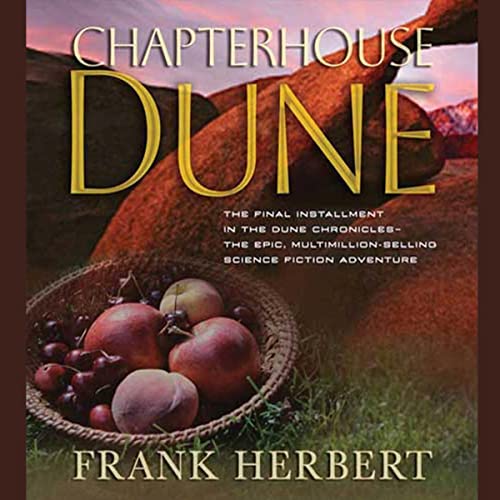
The Bene Gesserit are running out of time. With Arrakis gone and a brutal new power sweeping the galaxy, the Sisterhood must remake an entire world, resurrect an ancient ecology, and outthink enemies who turn desire itself into a weapon. Chapterhouse: Dune is a novel about survival at civilizational scale—but also about what people surrender, and what they refuse to, when everything is at stake. Herbert keeps the emotional center intimate even as the canvas grows enormous, and the questions he raises about power, memory, and the cost of certainty feel less like science fiction conceits than genuine philosophical pressure.
What makes this particular book worth sitting with is Herbert's prose, which by the sixth volume has shed any remaining concession to conventional pacing. Chapters unfold like strategic negotiations—layered, elliptical, trusting the reader to catch what isn't said. Inner monologue and geopolitical maneuvering blur together deliberately, because Herbert's point is that they're the same thing. It rewards patience and close attention, and arrives at an ending that is genuinely open rather than unfinished—a distinction that becomes clearer on reflection than it first appears.
This Book Features
Browse Related Lists
More in Dune

Dune
Book 1
658 pages

Dune Messiah
Book 2
336 pages

Children of Dune
Book 3
609 pages

God Emperor of Dune
Book 4
587 pages

Heretics of Dune
Book 5
669 pages

Hunters of Dune
Book 7
524 pages

Sandworms of Dune
Book 8
494 pages

The Road to Dune
426 pages
More by Frank Herbert

Frank Herbert 6-book Collection: The Book of Frank Herbert; The Worlds of Frank Herbert; The Santaroga Barrier; Direct Descent; The Eyes of Heisenberg; Destination:Void

The White Plague
502 pages

Hellstrom's Hive
336 pages

Whipping Star
192 pages

Destination: Void
276 pages

The Godmakers
176 pages