
Why You'll Love This
The most chilling part of this Cold War-era novel isn't the war — it's that there isn't one.
- Great if you want: paranoid political satire with genuine philosophical teeth
- The experience: lean and restless — Dick moves fast and trusts you to keep up
- The writing: Dick layers ideas recklessly, prioritizing concept over polish
- Skip if: you need fully developed characters alongside the ideas
About This Book
Imagine spending fifteen years underground, building weapons for a war you've never seen, trusting the flickering broadcasts that tell you the surface world is ash and ruin. In The Penultimate Truth, Philip K. Dick takes that claustrophobic premise and tears it open, asking what happens when the machinery of mass deception becomes someone's entire reality — and what a person risks when they dare to surface, literally and figuratively. The stakes aren't just survival; they're the question of whether truth still matters when lies have been perfected into an art form.
At under two hundred pages, this novel moves fast and thinks hard, which is exactly where Dick is at his most dangerous. His prose has the clipped urgency of someone who knows paranoia is a reasonable response to the world, not a malfunction. The narrative shuttles between the underground and the surface with a structural restlessness that mirrors its themes — nothing stays stable for long, and that instability is the point. Dick wrote this in 1964, but its portrait of manufactured reality and information as a weapon of control has only sharpened with time.
This Book Features
Browse Related Lists
More by Philip K. Dick
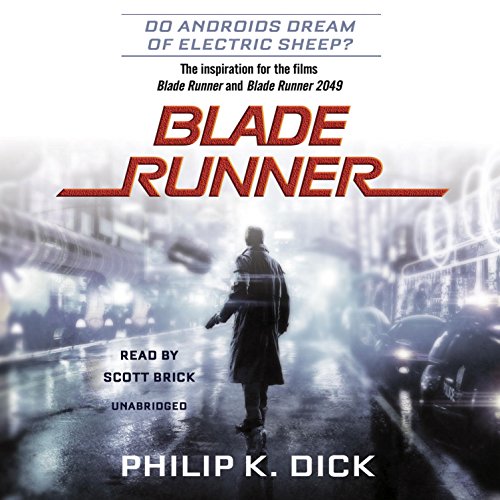
Do Androids Dream of Electric Sheep?
258 pages

Ubik
288 pages

The Minority Report and Other Classic Stories
380 pages

Martian Time-Slip
262 pages

The Man in the High Castle
259 pages

The Game-Players of Titan
223 pages