
Why You'll Love This
A man wakes up having apparently committed an act of public rebellion he has no memory of — and the society hunting him down is the one he helps run.
- Great if you want: early Dick: paranoid, compact, and quietly political
- The experience: fast and unsettling — satirical dread that builds under the surface
- The writing: Dick strips prose bare, letting the absurdity do the heavy lifting
- Skip if: you expect the depth of his later, more fully realized novels
About This Book
In a world rebuilt from nuclear ruin, conformity isn't just encouraged — it's enforced. Philip K. Dick's early novel drops readers into a society so suffocated by moral surveillance that even private thoughts feel dangerous. Allen Purcell appears to be a model citizen, exactly the kind of man the system rewards. But something in him is pushing back, and he may not fully understand what he's capable of — or what he's already done. The tension between outward compliance and inner rebellion gives the book its unsettling charge, and Dick keeps the stakes feeling genuinely personal rather than abstractly political.
What makes this novel worth reading is how much Dick accomplishes in such a compact space. At under 200 pages, it moves with real economy, never pausing long enough to let its satirical edge go dull. The prose has the slightly off-kilter quality that defines Dick's best work — ordinary surfaces that keep sliding toward something stranger. Written early in his career, it shows him already working the themes he'd spend decades refining: identity, control, and the quiet courage of refusing to be what a system needs you to be.
This Book Features
Browse Related Lists
More by Philip K. Dick
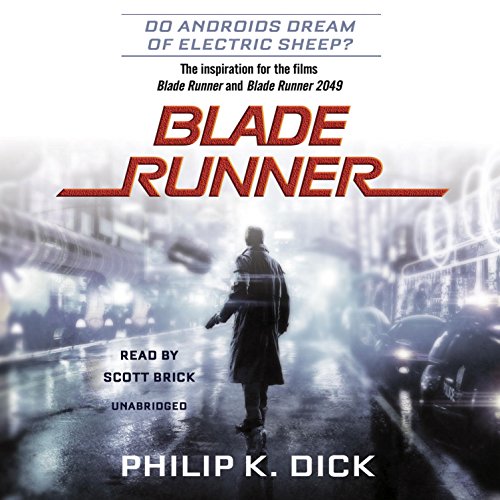
Do Androids Dream of Electric Sheep?
258 pages

Ubik
288 pages

The Minority Report and Other Classic Stories
380 pages

Martian Time-Slip
262 pages

The Penultimate Truth
191 pages

The Man in the High Castle
259 pages